










































































































Blog
Unless otherwise stated, content is shared under CC-BY-NC Licence
Community (+1)

William Kilbride is the Executive Director of the Digital Preservation Coalition (DPC)
One day more. As the sun sets on the Pacific islands west of the Americas, it’s time to declare an end to World Digital Preservation Day 2024.
The idea of World Digital Preservation Day is simple – to connect and to raise awareness. Those connected themes are still true and perhaps more needed than ever before. The theme this year was ‘Preserving Our Digital Content: Celebrating Communities’. So, as well as building and strengthening the digital preservation community, it encouraged us to consider the communities in which and for whom we work. In a lovely simile, Jeanne Kraymer-Smyth has compared the digital preservation community to the Crow and the Pitcher from Aesop’s fables: that we all can all add a pebble into the pitcher of water, raising the level for each other.
Preserving Time Based Media Art at Getty

Mari Allison worked as Digital Preservation Intern at the Getty and is now Digital Collections Specialist at the Smithsonian National Museum of American History
The DPC’s Museum and Galleries working group has been in place for almost a year and a half, and I’ve had the opportunity to join in their meetings during my year at the Getty. I always learn a lot when others discuss their projects, and I’d like to elaborate on a project we’ve mentioned briefly in those meetings, Time Based Media (TBM) artworks at the Getty Museum.
Fast Learns, Slow Remembers: a pace-layered approach to community
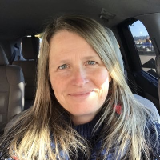
Kelly Stewart is Chief Archivist at Artefactual Systems Inc.
When I reflect on the features that define the digital preservation community, I see two notable characteristics. One is slow and cautious, the other fast and free. While these two aspects may seem to be diametrically opposed, both are nonetheless necessary in the digital preservation community so that our children and grandchildren (and so on) have the best chance of living in a world where cultural memory thrives.
At Artefactual we often turn to the work of Stewart Brand and the Long Now Foundation for inspiration. Stewart Brand approaches civilisation and how it operates as layers: fashion is the top layer and is always in motion, nature is the bottom layer and changes very slowly. In between are layers of commerce, governance, and infrastructure. This pace layered approach helps us at Artefactual keep focused on how we approach digital preservation (fashion = software, nature = AIP or digital content).
Digital Preservation in NGOs: The Case of Wikimedia Mexico

Claudia Muñoz López is a student at Universidad Nacional Autónoma de México (UNAM) and winner of the 2024 Digital Preservation Award for Most Outstanding Student Work in Digital Preservation
Este blog está disponible en español a continuación:
Non-governmental organizations (NGOs) are autonomous, non-profit associations integraded by volunteer citizens who are part of civil society. They are characterized by their focus on specific social work; although their purpose is not to generate financial resources for their members, they have a formal constitution and defined objectives. Additionally, they are independent from the government but can contribute to the development of public policies.
NGOs are important because they have a prominent role in the promotion of human rights and focusing on sectors that the government not always be able to support and manage. They possess unique information about the issues and sectors in which they work. In this way, preserving their information is essential to maintain legal evidence of their activities, transparency requirements, and provide long-term support for the organization’s memory and history. However, according to the Digital Preservation Coalition (DPC), NGOs face specific contexts and challenges, such as a lack of knowledge about digital preservation, insufficient infrastructure and budget, political instability, or inadequate backups, among others.
The chapters and user groups recognized by the Wikimedia Foundation are non-profit associations dedicated to promoting Wikipedia and free knowledge, as well as Creative Commons licenses, open access, and free culture. They are integrated by volunteers and staff and vary in size and scope. This text focuses on Wikimedia Mexico.
Preserving the Digital History of Nashville Pride

Zach Johnson is Associate Director for Digital Special Collections at Vanderbilt University Libraries
World Digital Preservation Day (#WDPD2024) offers the digital preservation community a chance to highlight the importance of preserving our digital legacy through effective strategies collectively created by members of the Digital Preservation Coalition and other institutions around the world. This year’s theme of “Preserving Our Digital Content: Celebrating Communities” is particularly relevant to Vanderbilt University Libraries. The team at Special Collections and University Archives have made major efforts to address digital preservation needs within the libraries and have expanded the level of support we can offer to Middle Tennessee community groups. We have made this real in the fall of 2023 by hiring Sarah Calise as Metadata Coordinator and Curator of Community Histories who is explicitly tasked with working with local underrepresented communities to expand our community collections. Furthermore, we have acquired new high-quality digitization equipment, and we are continuing to spend significant staff hours documenting a digital preservation strategy, alongside developing comprehensive policies, procedures, and standards.
Community Resources and File Format Signature Development

Amanda Tomé is Preservation Coordinator for the Digital Research Alliance of Canada
Background
2024 is the year of file formats for the Digital Research Alliance of Canada’s Federated Research Data Repository (FRDR). It’s been a year of being confused by file formats, overwhelmed by file formats, and generally trying to figure out what to do with the file formats in our repository.
After reviewing the results of a file metrics scan undertaken on the repository in March 2024, which effectively confirmed our suspicions that many of the file formats in FRDR were not present in file format registries, I knew there was a lot of work to be done to get a better handle on the file formats in our repository. However, I wasn’t entirely sure how to get started or the approach to undertake. I also wanted this work to benefit the Canadian research data community and the digital preservation community.
Fixity Check: A New Way for NARA to Share Knowledge with the Digital Preservation Community

Hannah Wang is Senior Digital Preservation Specialist at the U.S. National Archives and Records Administration
The U.S. National Archives and Records Administration (NARA) is pleased to announce that we have a new blog: Fixity Check! Fixity Check will highlight digital preservation efforts at NARA, from updates to our Digital Preservation Framework, to file format deep dives, to interviews with staff across NARA. In addition to our dedicated digital preservation staff, NARA is fortunate to have experts in electronic records and digital preservation working across the agency, from records policy to archival processing – we are excited to share more information about the work that we do across NARA to ensure long-term preservation and access to our nation’s records.
The Phoenix or The Crow: Expanding the Definition of Digital Preservation Community

Jeanne Kramer-Smyth is the Digital Preservation Program Lead at the World Bank Group Archives
Back in 2018, when the Digital Preservation Program at the World Bank Group had matured enough for me to begin sharing regular progress updates with the broader World Bank Group Archives team, I had an opportunity to redefine what it meant to be “part of” our digital preservation community. With the enthusiastic support of the leadership of the Archives, I hosted a half-day workshop that included all the archives’ staff. My goal was to invite everyone to participate in the creation of the new program. We needed the combined depth and breadth of their expertise. While digital preservation certainly has major technological components, it still needs adherence to standard archival principles and processes to be successful. We needed our subject matter expects in transfer, ingest, appraisal, selection, arrangement, description, and access to tell us what we didn’t know.
World Digital Preservation Day 2024: Raising Awareness for Oral Histories at Risk

Nathan Tallman is Executive Director at APTrust
World Digital Preservation Day is organized by the Digital Preservation Coalition (DPC), a global membership organization dedicated to ensuring the longevity of digital assets. Through their annual Bit List of Endangered Species, the DPC highlights digital materials at high risk of loss.
The 2024 Bit List of Endangered Digital Species has classified oral histories as “Endangered,” with a noted trend toward even greater risk. The urgency to act within the next three years underscores the critical need to preserve these invaluable narratives, particularly given the increased risk of degradation and obsolescence of media holding such histories.
Preserving Our African Digital Content: Celebrating Keiyo Indigenous Knowledge

Gladys Kemboi is a PhD candidate in Information Science , University of Illinois at Urbana-Champaign, and the recipient of the 2024 Digital Preservation Coalition (DPC) Fellowship Award.
On this World Digital Preservation Day, we reflect on the significance of African digital content and Indigenous knowledge systems. In Africa, an elder is the entire library and knowledge repository of wisdom, information, knowledge, cultural practices, and stories. What happens when this human knowledge walks away? This highlights the significance of digital preservation efforts in documenting and preserving this valuable knowledge. DPC recently honored Gladys Kemboi with the 2024 DPC Fellowship Award, for her impact in digital legacy and preservation of local and Indigenous knowledge in Kenya and across Africa. As we reflect on this World Digital Preservation Day, the work of individuals like Kemboi and global partners serves as a powerful reminder and highlights a growing movement to support Indigenous communities in digitizing their knowledge and creating a digital legacy that will inform and enrich future generations.